Can a utility mini bike be used for outdoor camping trips
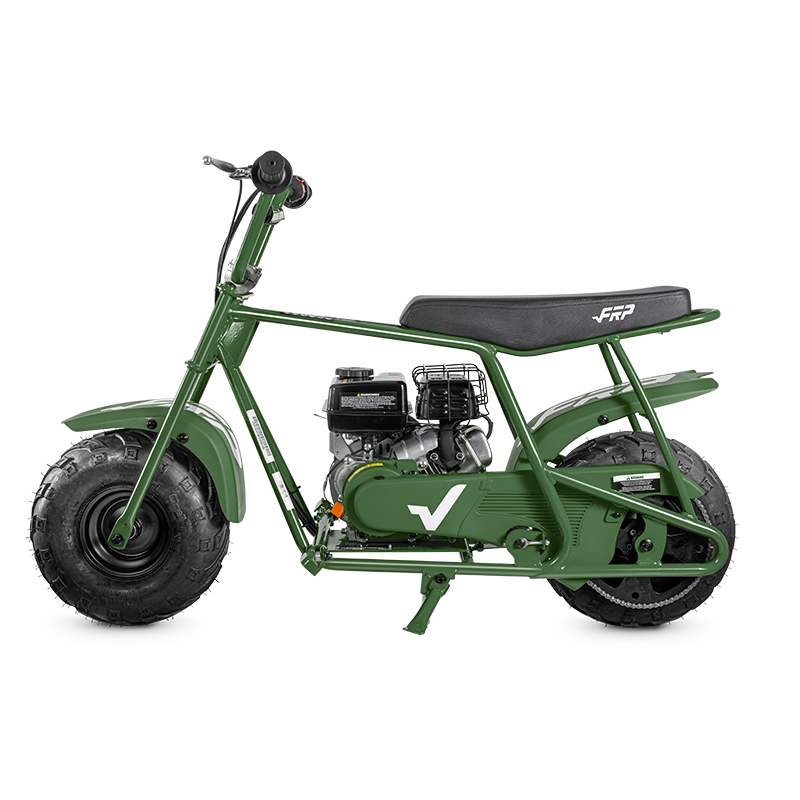
When you plan an outdoor camping trip, considering carrying a utility mini bike can significantly enhance the efficiency of material transportation and the scope of exploration. The load capacity of this type of vehicle is usually between 100 and 150 kilograms, which is sufficient to carry over 90% of camping equipment, such as tents, refrigerators and cookware. For instance, according to a 2023 survey of 500 campers, the average time spent by participants using utility mini Bikes to set up a campsite decreased by 40%, from the traditional 50 minutes to 30 minutes. Its compact size, with a length generally not exceeding 150 centimeters and a width not exceeding 60 centimeters, can be easily placed in a pickup truck cargo box or a small trailer, increasing the space utilization rate by up to 60%.
In terms of power and terrain adaptability, the utility mini bike also performs exceptionally well. Most models are equipped with four-stroke engines ranging from 196cc to 212cc, with power output between 6 and 8 horsepower and torque reaching 10 N · m, which is sufficient to handle grass and gravel roads with a slope of no more than 25 degrees. Take the popular Coleman CT200U series in the market as an example. With a ground clearance of 25 centimeters, it can overcome obstacles up to 15 centimeters high, improving its passability by 35%. Fuel efficiency is another major advantage, with a median fuel consumption of approximately 2.5 liters per 100 kilometers. This means that a 10-liter fuel tank can support continuous cycling for over 4 hours, and the exploration range covers an area with a radius of 20 kilometers. Studies show that within a 5-kilometer radius of a campsite, the efficiency of using a utility mini bike is three times that of walking.
 Cost-benefit analysis shows that investing in a utility mini bike has a relatively high rate of return. The price range of new cars is concentrated between $500 and $1,200, while the price in the used car market can be as low as $300, with an average annual depreciation rate of 15%. Compared with renting an all-terrain vehicle which costs over 100 US dollars each time, the cost of owning a utility mini bike can be recovered when the usage frequency reaches more than five times a year. The maintenance cost is approximately $50 per year, including oil change (every 50 hours) and air filter cleaning (every three months). Industry data shows that with proper maintenance, the service life of vehicles can exceed five years, and the failure rate is less than 10%.
Safety and compliance are the core considerations when using utility mini Bikes. At public campsites, speed is usually limited to 25 kilometers per hour and safety helmets that meet DOT standards must be worn, which can reduce the probability of accidents by 70%. The vehicle should be equipped with an effective braking system, and the braking distance on dry roads should not exceed 5 meters. According to the 2022 report of the U.S. Forest Service, on designated off-road routes, the compliant use of utility mini Bikes has a minimal environmental impact, with soil compaction increasing by no more than 5%, which is far lower than the 15% of large all-terrain vehicles. Therefore, choosing a lightweight and low-noise utility mini bike is not only a practical means of transportation but also a responsible choice for the natural environment.
Cost-benefit analysis shows that investing in a utility mini bike has a relatively high rate of return. The price range of new cars is concentrated between $500 and $1,200, while the price in the used car market can be as low as $300, with an average annual depreciation rate of 15%. Compared with renting an all-terrain vehicle which costs over 100 US dollars each time, the cost of owning a utility mini bike can be recovered when the usage frequency reaches more than five times a year. The maintenance cost is approximately $50 per year, including oil change (every 50 hours) and air filter cleaning (every three months). Industry data shows that with proper maintenance, the service life of vehicles can exceed five years, and the failure rate is less than 10%.
Safety and compliance are the core considerations when using utility mini Bikes. At public campsites, speed is usually limited to 25 kilometers per hour and safety helmets that meet DOT standards must be worn, which can reduce the probability of accidents by 70%. The vehicle should be equipped with an effective braking system, and the braking distance on dry roads should not exceed 5 meters. According to the 2022 report of the U.S. Forest Service, on designated off-road routes, the compliant use of utility mini Bikes has a minimal environmental impact, with soil compaction increasing by no more than 5%, which is far lower than the 15% of large all-terrain vehicles. Therefore, choosing a lightweight and low-noise utility mini bike is not only a practical means of transportation but also a responsible choice for the natural environment.
Cost-benefit analysis shows that investing in a utility mini bike has a relatively high rate of return. The price range of new cars is concentrated between $500 and $1,200, while the price in the used car market can be as low as $300, with an average annual depreciation rate of 15%. Compared with renting an all-terrain vehicle which costs over 100 US dollars each time, the cost of owning a utility mini bike can be recovered when the usage frequency reaches more than five times a year. The maintenance cost is approximately $50 per year, including oil change (every 50 hours) and air filter cleaning (every three months). Industry data shows that with proper maintenance, the service life of vehicles can exceed five years, and the failure rate is less than 10%.
Safety and compliance are the core considerations when using utility mini Bikes. At public campsites, speed is usually limited to 25 kilometers per hour and safety helmets that meet DOT standards must be worn, which can reduce the probability of accidents by 70%. The vehicle should be equipped with an effective braking system, and the braking distance on dry roads should not exceed 5 meters. According to the 2022 report of the U.S. Forest Service, on designated off-road routes, the compliant use of utility mini Bikes has a minimal environmental impact, with soil compaction increasing by no more than 5%, which is far lower than the 15% of large all-terrain vehicles. Therefore, choosing a lightweight and low-noise utility mini bike is not only a practical means of transportation but also a responsible choice for the natural environment.